ANKEBOT
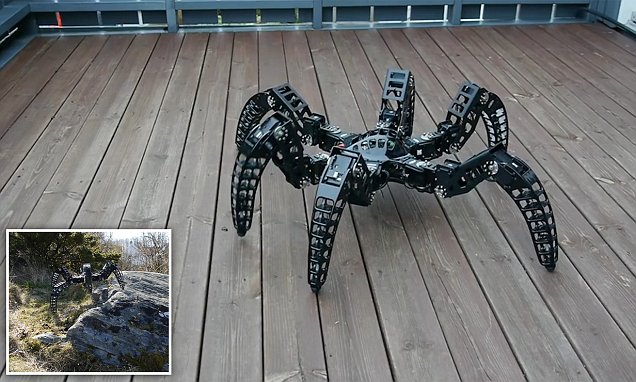
Within the scope of our project, it is aimed to develop a 6-legged robot with 18 degrees of freedom. The kinematic and dynamic analysis of the robot is carried out with the help of MSC Adams software. The processes that will detect the contact of the robot's legs with the ground are created in the Adams program, and the algorithms that will keep our robot balanced and move it work simultaneously with the Matlab application. The parameters that will keep the system balanced are determined and Matlab's plugins for optimization are used while determining the parameters.
Robot simulators provide the opportunity to predict the performance of theoretical findings before applying them to real robots. In this study, it is aimed to present 3D modeling and simulation for a hexapod, a flexible animal-like robot with multiple joints, using the Gazebo simulator and the Robot Operating System (ROS) aiming at system performance analysis in a variable robot. In this context, a hexapod robot with a defined workspace was designed, all physical and inertial properties were defined and simulated.
Gazebo provides simulation of robot world environment, physical model, sensors and control system via Unified Robot Description Format (URDF) and parameterized robot component macro (XACRO) file. With this simulation, deficiencies that may occur in the robot before the real system implementation can be detected. In this way, it is possible to develop and test the necessary software. In this study, a study is planned to be conducted to present an evaluation by performing position control of an animal-like robot (spiders) with hexapod driving feature. And as a result of the obtained results, the control of the robot both autonomously and manually via simulation is provided stably. Manufacturing has been avoided due to its cost and the inability to create a suitable environment. However, G codes that can be manufactured for both 3D printer and router cutter of the system have been prepared.
Keywords: Multi-joint robot, Animal robot, Gazebo, Closed loop control, Kinematic calculations, Position Control, Matlab, MSC Adams, ROS, Simulink, Simulation
A hexapod robot is a mechanical vehicle that walks on six legs. Since a robot can be statically stable on three or more legs, a hexapod robot also has great flexibility in how it moves. If the legs are disabled, the robot can still walk. Also, not all of the robot's legs are needed for stability; the other legs can change position or manipulate a load.
Many hexapod robots are biologically inspired by spider locomotion. Hexapods can be used to test biological theories about insect locomotion, motor control, and neurobiology. For these reasons, they have both freedom of movement and workspace, and require precise kinematics. Since the kinematic chain constantly changes shape during movement, forward and inverse kinematics calculations are quite difficult.
Hexapod designs vary in their leg arrangement. Insect-inspired robots are typically laterally symmetrical, such as the RISE robot at Carnegie Mellon. A radially symmetric hexapod is the ATHLETE (All-Terrain Hex-Legged Extra-Terrestrial Explorer) robot at JPL. Hexapods typically have between two and six degrees of leg count. Hexapod feet are typically pointed, but can also be tipped with adhesive material to help climb walls or wheels, allowing the robot to move quickly when the ground is flat. In our own design, we designed our hexapod to be radially symmetrical, which is what we will be working with in our analysis.
Insects are chosen as models because their nervous systems are simpler than those of other animal species. Furthermore, complex behaviors can be attributed to only a few neurons, and the path between sensory input and motor output is relatively short. The walking behavior and neural architecture of insects are used to improve robot locomotion. Conversely, hexapod robots can be used by biologists to test different hypotheses.
Biologically inspired hexapod robots are largely dependent on the insect species used as a model. Cockroaches and stick insects are the two most commonly used insect species; both have been extensively studied ethologically and neurophysiologically. No complete nervous system is currently known, so models often combine different insect models, including those of other insects.
Insect walks are generally obtained by two approaches: centralized and decentralized control architectures. While centralized controllers directly specify the transitions of all legs, in decentralized architectures six nodes (legs) are connected in a parallel network; walks emerge from the interaction between neighboring legs. Considering all these studies, we will prefer a walking algorithm system called “Alternating tripod” that can remain stable by sharing the load while the other three legs are in motion. Apart from this method, “Quadruped” and “Crawl” walking algorithms are among the frequently preferred methods we have encountered in research.
Another program we used after design in our study was “MSC Adams”. MSC ADAMS (Automatic Dynamic Analysis of Mechanical Systems) is a multibody dynamic simulation software system. It is currently owned by MSC Software Corporation. The simulation software solver mainly runs on Fortran and more recently on C++. According to the company, Adams is the most widely used multibody dynamic simulation software. The software package runs on both Windows and Linux. Adams has a complete graphical user interface to model the entire mechanical assembly in a single window. Graphical computer-aided design tools are used to insert the model of a mechanical system into three-dimensional space or to import geometry files such as STEP or IGS. Joints can be added between any two bodies to constrain their motion. Various inputs such as velocities, forces and initial conditions can be added to the system.
Adams simulates the behavior of the system over time and can simulate its motion and calculate properties such as accelerations, forces, etc. The system can include more complex dynamic elements such as springs, friction, flexible bodies, contact between bodies. The software also provides additional CAE (Computer Aided Engineering) tools such as design exploration and optimization according to selected parameters. The inputs and outputs of the simulation can be opened in the interface with Matlab, Simulink for applications such as control and the mathematical model can be created for simultaneous use in such environments. We were able to both run our kinematic system on the real-time simulation and transfer the dynamic calculations to the graph by using motion commands in addition to our dynamic calculations.
One of the main purposes of modeling a robot is to measure different capabilities such as robot behavior, performance, and accuracy through a simulation program. Therefore, a robotic simulation tool can check for critical flaws in the robot design. It can verify that the robot works before moving to the production stage.